
Guides
Leavers, Jacquard, Embroidery: A Small Lexicon of Lace
7 min read
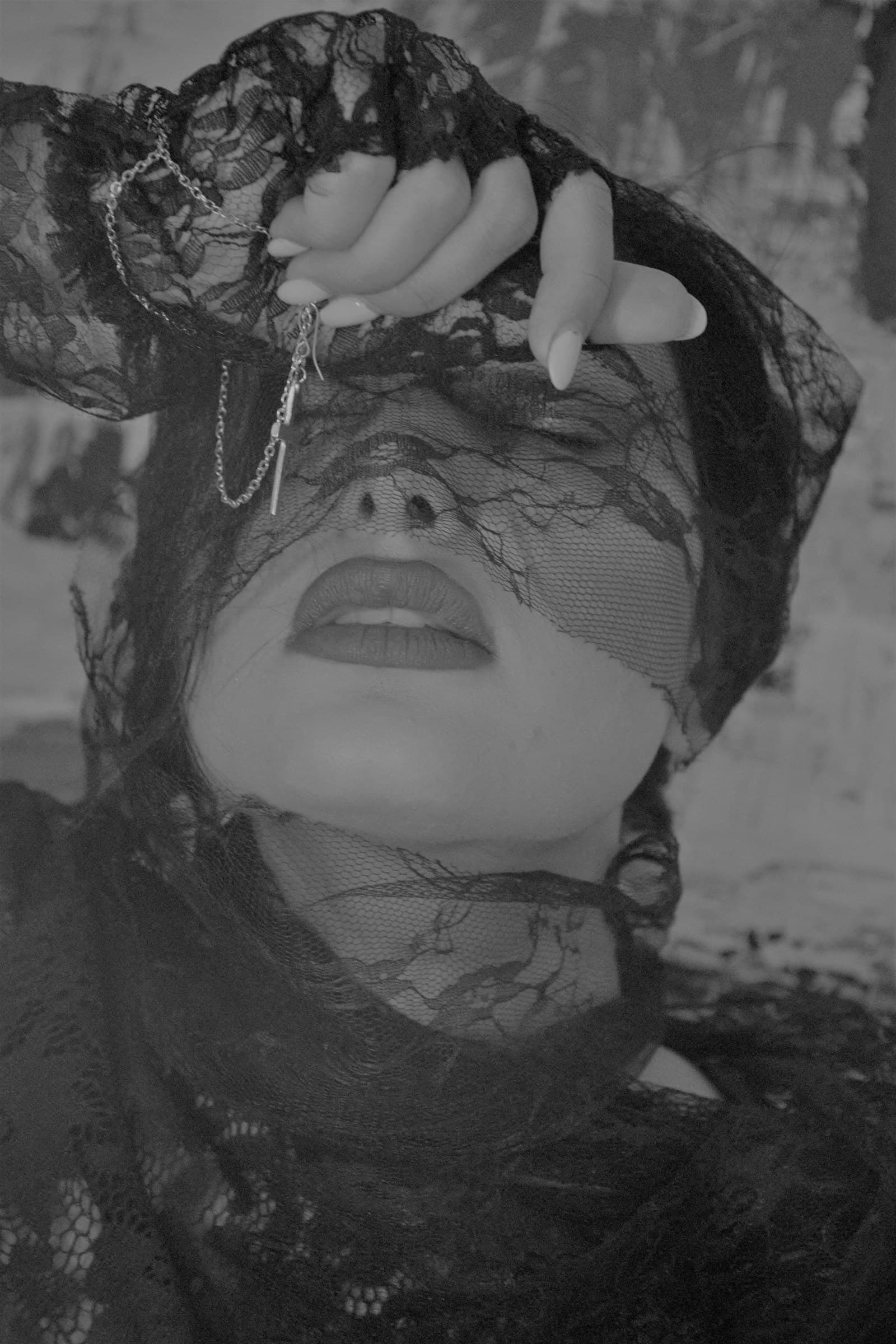
Some fabrics are meant to be looked at; others are meant to be read. Lace belongs to the second family: it has its own script, its own grammar, its own dialects. The word “lace” on its own says very little — just as the word “wine” says nothing yet about grape or vintage. Under one name live materials divided by almost everything: how they are made, the precision of their drawing, their weight, how they behave on skin, and their price per metre.
This lexicon is not meant to turn anyone into a textile technologist. It is meant to ensure that at your next encounter with lace — on a bra strap, at the top of a stocking, along the neckline of a night slip — you will know exactly what you are looking at, and what you are touching.
Leavers. The aristocrat from Calais
We begin at the summit. Leavers lace owes its name to John Levers, a Nottingham machine-builder who, in 1813, reworked a tulle machine so that it could twist threads into pattern. Within a couple of decades the machines — some of them smuggled across the Channel, because England guarded its advantage jealously — reached Calais and Caudry in northern France. They are still working there today, and that is no figure of speech: no Leavers machine has been built for roughly a century, so every working example is a multi-ton veteran of the nineteenth or early twentieth century, kept alive with parts from machines that have stopped. The trade of the tulliste who runs them is still handed down like a family secret.
Leavers does not knit; it twists. Thousands of threads — a single machine can carry over ten thousand — cross and wrap around one another exactly as they do in handmade bobbin lace, while the pattern is dictated by the punched cards of the Jacquard system. Production speed is measured in metres per hour, not kilometres. Up close, you can see what that patience buys: shading like a pencil sketch, fluid transitions from dense to sheer, a contour that is confident and soft at once. In wear, Leavers lace is dry, cool and disciplined — it barely stretches, and it holds its shape for years.
Here, quality announces itself in writing and in daylight. Authentic lace from the region carries the protected mark dentelle de Calais-Caudry, reserved exclusively for lace made on Leavers machines. And against the light, the repeat — the recurring module of the pattern — should be perfectly symmetrical. No hurried imitation ever passes that test.
No one builds Leavers machines anymore. Every metre of this lace is made on a machine older than everyone who works beside it.
Chantilly. A shadow cast on skin
Chantilly is less a technique than a style of handwriting. The name comes from a small town north of Paris where, in the eighteenth century, black silk lace was worked on bobbins — lace so light it was compared to a shadow. Madame du Barry and Marie Antoinette both loved it; history treated them less kindly than the lace, which is worn to this day. Modern Chantilly is mostly made on Leavers machines, but it has kept its distinguishing marks: a fine hexagonal net ground, floral motifs, and a contour traced in a flat, matte, untwisted strand — the source of that inky, calligraphic line.
On the skin, Chantilly barely exists. It weighs about as much as a breath, moves without resistance and works the way a shadow does: it does not cover, it darkens. Black plays its own role here — good Chantilly is matte and deep, without synthetic sheen, because shine robs the drawing of the contrast this lace lives on. You recognise a fine one by an edge finished in scallops with delicate “eyelashes”, by motifs whose contour never breaks, and by a net whose cells are identical from one selvedge to the other.
Jacquard and Raschel. Two temperaments of knit
Most contemporary lace is neither woven nor twisted but warp-knitted — on Raschel machines, or in nobler versions on their electronically controlled successors, the Jacquardtronic and Textronic. The difference from Leavers is fundamental: here the thread forms loops, as in a knit, which is why the lace can be elastic. This is the family where stretch lace with elastane lives — the foundation of nearly all modern lingerie.
What separates Raschel from jacquard is the resolution of the drawing. Raschel lace is the simpler creature: a flat pattern, a coarser net, two or perhaps three tonal steps. Jacquard lace can do far more — thicken and thin its ground, shade a petal, and in the Textronic variant add a third, embroidering thread that builds a relief on the surface, imitating the corded outline of Chantilly. Up close the difference is immediate; from a distance, light gives it away, because cheap knit shines synthetically where good jacquard merely glows.
In wear, this family is the most forgiving: it stretches, recovers, fits without pressure. Quality is checked with two gestures. Stretch a band of the lace and watch whether the pattern returns to form without slackening; then hold the loops against the light — they should be as even as typescript. Finally, the edge: finished, soft, and never fraying under a fingernail.
Embroidered tulle and guipure. Drawing and sculpture
One branch of this family is, technically speaking, not lace at all — it is embroidery impersonating lace so beautifully that nobody objects. Embroidered tulle is made when an embroidery machine, heir to the great Schiffli machines of St. Gallen in Switzerland, stitches a motif onto a ready-made net. The needle works like a pen on paper: it can pack the stitching to full coverage or scatter it into single dots. The effect can be painterly — a dense, slightly raised drawing on a ground so sheer the flowers seem to hover just above the skin.
Guipure goes one step further: it gives up the ground altogether. The motifs are embroidered onto a backing that later disappears — once dissolved chemically, today usually in hot water — leaving only narrow connecting bars, the brides. This is lace as sculpture: dense, plastic, shape-holding; made for edges, straps and the places where lingerie needs architecture rather than mist.
With embroidery, turn the fabric over — the reverse tells the truth: threads should be locked in, with no loose floats or knots. With guipure, press the bars — they should be tight and springy, with no protruding ends, because they carry the whole construction.
How to read lace with your fingers
Shop lighting can lie; fingertips never do. Silk merchants once judged their goods with gloves removed only at the counter — we propose a simpler ritual: dry, clean hands, a moment of attention, and three gestures that say more about lace than any label.
- Read the contour. Run a fingertip along the edge of a motif. Leavers and Chantilly have a contour you can feel, but soft, like a pencil line under tracing paper; Textronic is more pronounced and slightly springy; cheap Raschel is as flat as a print.
- Crush and release. Gather the lace in your hand and open it. Good material falls and straightens under its own weight; lace stiffened with finishing agents crackles and stands; lace overloaded with elastane snaps back like rubber.
- Hold it to the light. The net should be even, the repeat symmetrical, and any thickening only where the designer intended it. Check the seam joining lace to fabric, too: flat, concealed, sewn in a matching thread. If your fingertip feels the seam more clearly than the lace, your skin will feel it more clearly still.
The hand learns quickly. After a few deliberate encounters with good lace, it will recognise a lesser one before your eyes reach the label.
A dictionary that ends on the skin
Lexicons exist so that one day we can stop needing them. Telling Leavers from jacquard, Chantilly from guipure, is not knowledge for its own sake — it is the skill that turns lingerie from a purchase into a choice. At YES VERSE we sew lace to silk: two materials that demand the best of each other.
We write about caring for so delicate a union in the silk care ritual, and about the hands that stitch it in the story from our atelier in Bielsko-Biała. Lace, like any language, has better and worse dialects. It is worth speaking the one from Calais.