
Care
The Silk Care Ritual: How to Wash, Dry and Store the Most Delicate of Fabrics
7 min read

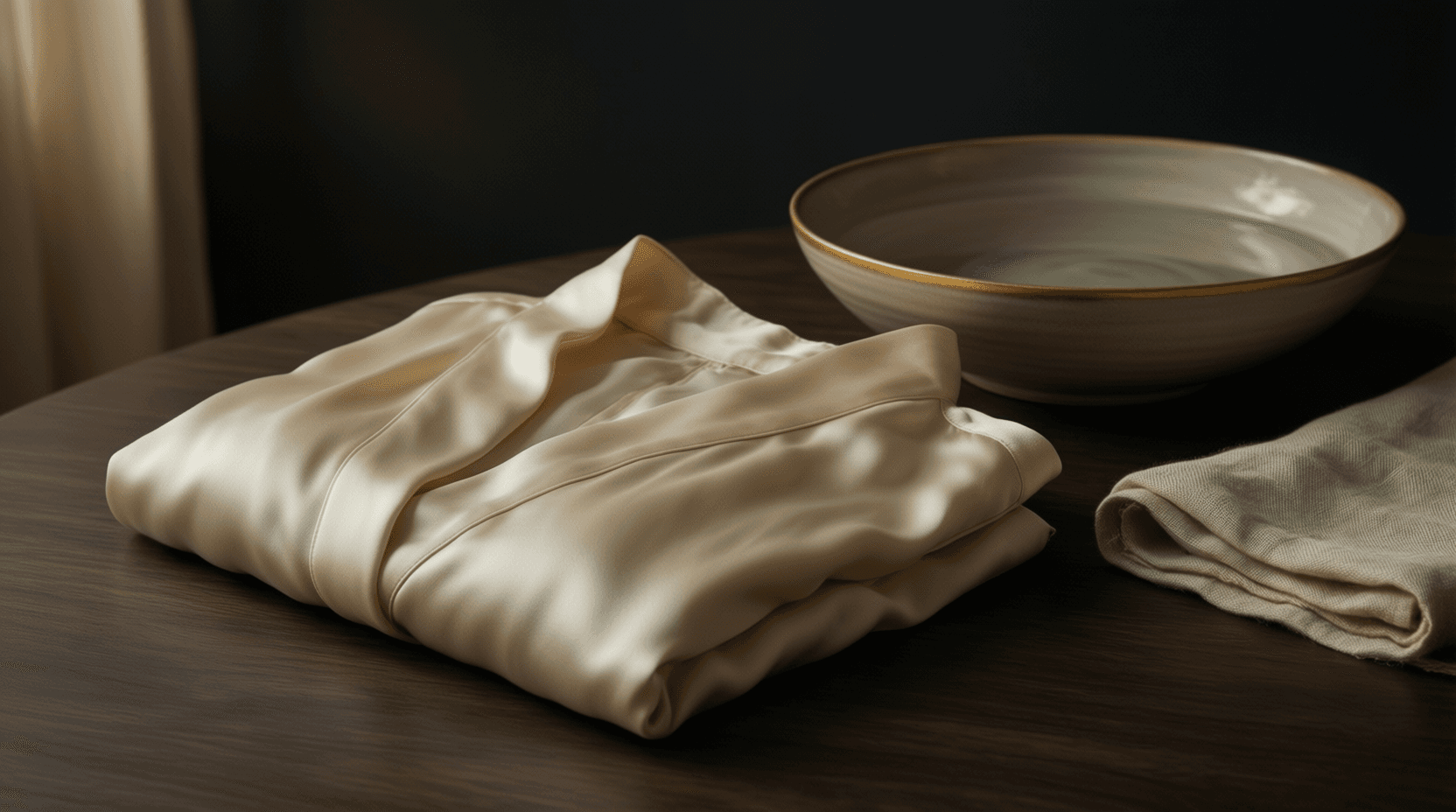
A basin of cool water, half a teaspoon of gentle detergent and five minutes of undivided attention. The silk care ritual begins modestly, yet these few gestures decide whether your favourite set keeps its lustre and cool touch for years — or fades into a matte memory of itself after a handful of washes. Washing silk in the evening does not have to be a chore you keep postponing; given a little attention, it becomes a brief, quiet ceremony that closes the day. The water is cool, the movements are slow, the scent of detergent is barely there. Mindfulness rarely comes in a simpler form.
This guide gathers everything silk truly needs: exact temperatures, times and a list of ingredients that must stay far away from the most delicate of fabrics. No vague advice — just parameters you could pin above your washing machine.
Fibroin, or why silk does not forgive
Cotton and linen are cellulose — plant fibres that shrug off hot water, alkaline powders and vigorous spinning. Silk is built differently: its core is fibroin, a protein chemically related to the keratin of human hair. That is why the rules of silk care sound familiar to anyone who looks after their hair — keep it cool, keep it gentle, avoid friction.
Protein has its weaknesses. High temperatures and strongly alkaline environments alter its structure permanently, much as a hot iron alters the structure of hair. The enzymes in most universal detergents break down fibroin as eagerly as the protein stains they were designed for. And because the silkworm's thread is one continuous, smooth filament — this smoothness is precisely where the fabric's signature sheen comes from — any mechanical damage to the surface dulls it for good. Worn silk cannot be “refreshed”; it can only be protected from wearing in the first place.
One more property worth remembering at every wash: wet silk loses up to a fifth of its strength. A fabric that would withstand a great deal when dry becomes fragile in water. Hence the iron rule — never wring, rub or tug wet silk.
Hand washing, step by step
The method where nothing can go wrong looks like this:
- Fill a basin with water no warmer than 30°C. In practice: your submerged wrists should not feel any warmth. Cooler water is always safer than warmer.
- Dissolve a small amount of pH-neutral detergent made for silk or wool — half a teaspoon per basin is plenty. More foam does not mean a better wash, only a longer rinse.
- Submerge the lingerie and move it gently through the water for 3–5 minutes. Do not rub the fabric against itself, do not knead it — it is enough that water flows through the fibres.
- Do not soak for longer than fifteen minutes. Dyes sit closer to the surface on silk than on cotton, and a long bath can loosen them.
- Rinse in clean, cool water — once or twice, until it stops foaming.
- Do not wring. Lift the fabric, let the water run off, then lay the piece on a towel, roll it up loosely and press with your palms. The towel takes the moisture without a single twist.
Wash silk the way you wash your hair: cool, gently and without haste. It is, after all, nearly the same protein.
The washing machine. A controversy and an honest compromise
Purists will say silk and a washing machine drum should never meet. The truth is less dogmatic: a densely woven satin charmeuse of decent weight will survive the “silk” programme unscathed — provided it gets the right conditions. The mesh bag really is enough, but only when every other parameter falls into line.
- “Silk” or “delicates” programme, 30°C, never higher.
- Spin switched off or capped at 400 rpm.
- A fine-mesh laundry bag, hooks fastened and closures done up — they are what snags the fabric most often.
- Wash separately or only with other delicate fabrics; a single denim button in the same drum can undo more than many careful hand washes.
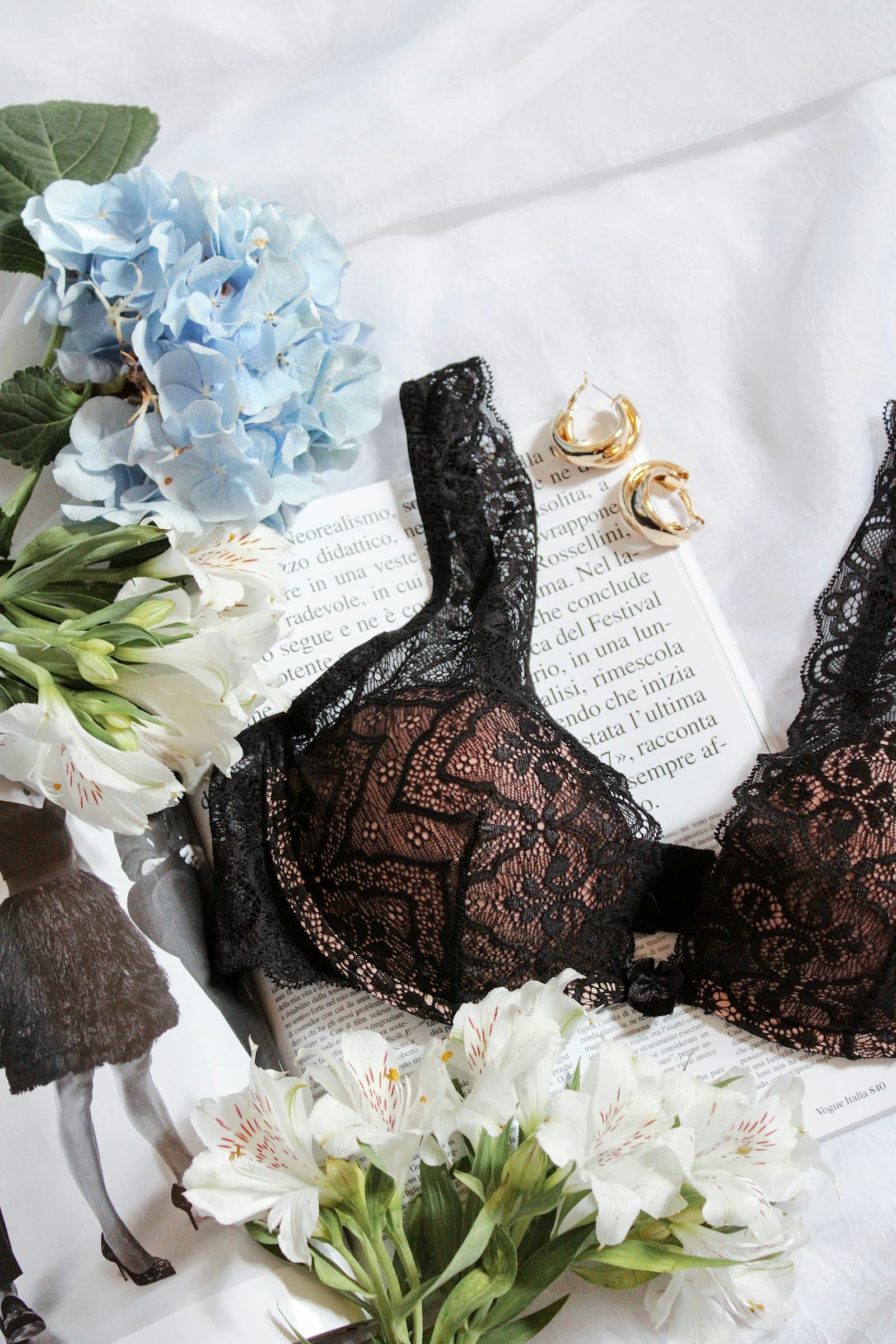
The real boundary runs elsewhere than commonly assumed. Lace trims, thin straps, embroidered appliqués — anything openwork or three-dimensional — should only ever be washed by hand, mesh bag or not. And no bag will protect silk from the wrong detergent: it is the liquid's formula, not the mechanics of the drum, that is the true front line.
What must not be in the detergent
Before a detergent lands in your basket, turn the bottle around and read the label. Four entries disqualify a product immediately:
- Enzymes (protease, amylase, lipase) — protease digests protein, and therefore fibroin. It is the most common silent silk killer, present in most “all-purpose” detergents.
- Bleach — chlorine destroys the fibre almost instantly; oxygen bleach works more slowly but just as irreversibly.
- Optical brighteners — they deposit on the surface of the thread and shift the fabric's tone, ivory and champagne shades fastest of all.
- Added softeners — they coat the smooth filament with a layer that mutes the natural sheen instead of enhancing it.
The safe choice is a detergent explicitly made for silk and wool, pH-neutral or slightly acidic. Traditional laundry soap, despite its gentle reputation, is alkaline — and has no business near silk.
Dry in the shade, iron inside out
Once the towel has taken up the moisture, the piece should dry flat — on a rack lined with a dry towel, somewhere airy, away from two enemies: the sun and the radiator. UV rays yellow light silk and fade colours faster than you would expect, and hot dry air makes the fibre brittle. The tumble dryer is out of the question, no exceptions — as is hanging wet silk on a metal hanger, which leaves marks and pulls straps out of shape. At room temperature silk dries surprisingly fast: usually within two or three hours.
Iron before the fabric dries completely — slightly damp silk yields to the iron almost without resistance. Always inside out, on the “silk” setting (110–130°C), in one flowing motion, never resting the soleplate in one spot. If the fabric has already dried, put a thin cotton cloth between it and the iron rather than sprinkling water — droplets can leave permanent matte spots on a satin weave.
Storage. Dark, dry, away from metal
What happens to silk between wearings often matters more than the wash itself. Light — artificial light included — slowly yellows pale shades, so silk lingerie belongs in a closed drawer or a cotton storage bag, never on an open shelf. Plastic boxes and film are a bad idea: they trap moisture, and a protein fabric needs to breathe.
Metal is a discreet adversary. Jewellery tossed into the same drawer, the hooks of another set, metal hangers — oxidising metal leaves yellow-brown stains on silk that no wash will remove, and every sharp edge is a potential snag. Fold silk loosely, without pressing, and never store it under heavier things — creases set over months can stay forever.
And then there are moths: to them, fibroin is a protein feast, exactly like wool. A lavender sachet or a block of cedar in the drawer settles the matter — provided you replace them every few months, once the scent fades.
Care as an extension of a relationship
“Buy less, choose well, make it last,” Vivienne Westwood used to say — and it is hard to find a better summary of the philosophy this ritual grows from. Five minutes at a basin of cool water is little to give back to a fabric that took weeks to come into being, thread by thread. The things we care for stay with us — and silk tended with attention does not merely last; it becomes more personal with time, settling to the body, remembering its owner. In a world accustomed to single-season clothes, that kind of relationship with an object is a quiet luxury — perhaps greater than the fabric itself.