
Care
Lace That Lasts. How to Store Your Most Delicate Pieces
7 min read
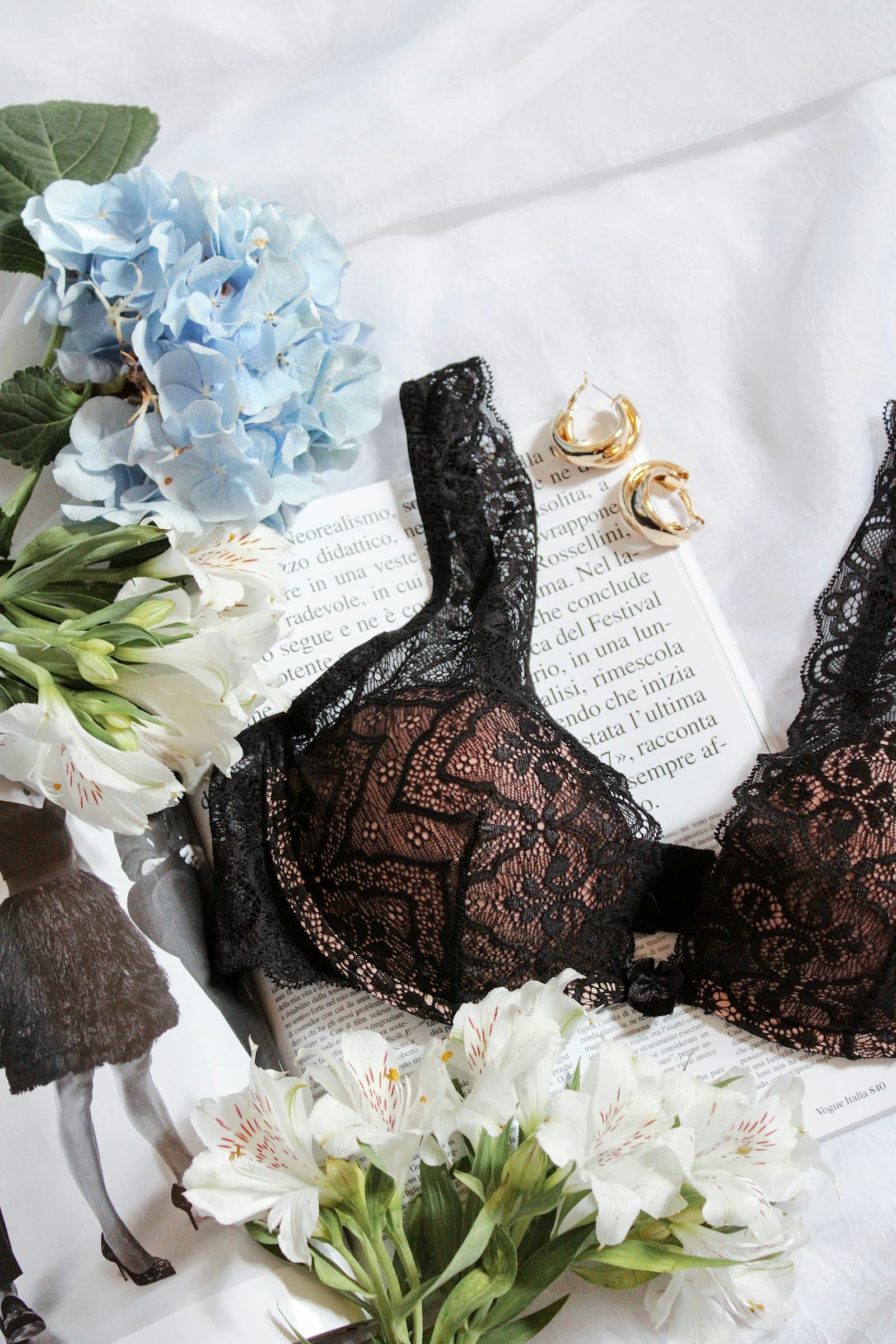
A snag in lace is rarely the washing machine's fault. Far more often it is the drawer — overfilled, dark only in theory, with the metal hook of a neighbouring bra lying inches away — that works on it week after week. We treat the washing of delicate things with something close to ceremony; storage happens without witnesses and without a second thought. Yet that is exactly where lingerie spends most of its life: between one evening and the next.
This piece closes our care trilogy. After the ritual of washing and drying silk, it is time for the final and quietest chapter: how to arrange a lingerie drawer in which lace survives for years — and what to do when, despite everything, something goes wrong.
Why the drawer does more damage than the wash
Laundry damage is spectacular and instant: shrunken silk, felted lace, a colour that ran at the first touch of water that was too hot. Storage damage is slow and almost invisible. A moulded cup deforms by a fraction of a millimetre a week. Elastic loses its spring because it has spent months compressed into a concertina. Silk yellows against the ordinary cardboard it rests on, and the edge of a lace trim frays against the hook lying beside it. By the time we finally notice, the damage is usually permanent.
There is good news in this, though: storage is the cheapest and simplest part of caring for lingerie. It calls for no special products and no courage. You rethink the drawer once — and change a few habits repeated unthinkingly for years.
Washing happens to lingerie once every few wears. The drawer works on it every single night.
Bras: never fold one cup into the other
The most common mistake in the lingerie world is flipping one cup inside the other so a bra takes up less room. Moulded foam has a memory: creased once, it deforms for good, and sooner or later the crease will show through a thin blouse like a fold in paper. Bras with moulded cups should be stacked one behind another, boutique-style — cup nested into cup, straps tucked inside, in a drawer deep enough that nothing presses down on them from above.
Soft styles — lace bralettes, wireless bras — may be folded in half, but always with the hooks fastened. An open hook is a small harpoon: in a crowded drawer it will find lace faster than you expect. Underwires, in turn, dislike weight. Never stack sweaters, jeans or books on top of lingerie — under constant pressure the wire slowly changes its geometry, and with it, the way the bra fits.
Acid-free tissue and cotton instead of plastic
Silk and lace are fibres that breathe — which is precisely why plastic harms them. Plastic bags and vacuum packs trap moisture against the fabric; combined with the warmth of a bedroom, that is a straight road to yellowing and a musty smell no wash will ever remove. Anything meant to rest for longer than a week should be wrapped in materials that let air through.
Tailoring workshops have relied on two things for decades. The first is acid-free tissue paper: ordinary cardboard and brown wrapping paper contain acids and lignin that migrate into fabric over time as yellow stains — a sheet of acid-free tissue between layers of lingerie costs pennies and shields silk from the wood and lacquer of the drawer. The second is cotton pouches: stockings, hold-ups and lace briefs kept each in its own pouch cannot catch on one another, and cotton absorbs excess moisture.
- A sheet of acid-free tissue on the bottom of the drawer and between layers — especially against raw or freshly lacquered wood.
- A separate cotton pouch for every pair of stockings; take off rings and bracelets before handling them.
- A lavender sachet or a block of cedar in the corner of the drawer — replaced every season and never in direct contact with the fabric.
Hold-up stockings deserve a paragraph of their own. The silicone band that keeps them on the thigh loses its grip to two things: talc and contact with other fabrics. Kept loose in a drawer, the silicone collects microscopic dust and fibres, and the stockings simply “stop holding” — though nothing about them is broken. Roll them loosely, silicone inwards, each pair into its own pouch; before wearing, a wipe of the band with a damp palm restores the grip.
The four quiet enemies: light, damp, moths and metal
Light — including what seeps through the glass door of a display cabinet or a wardrobe left ajar — fades dyes and weakens silk fibres. Lingerie you do not reach for daily should rest in complete darkness. Damp is enemy number two: the bathroom is the worst possible home for a lingerie drawer, and a set put away even slightly damp carries water into a closed space it has no way of leaving.
Clothes moths take no interest in polyester — they hunt natural fibres, and to their larvae silk is every bit as appetising as cashmere. Airing the drawer regularly, lavender and cedar all act as deterrents; once larvae have appeared, only a full inspection of the shelf and a wash of everything that lay nearby will help. The fourth enemy is the most prosaic: metal. Hooks, the zip of a cosmetics bag, jewellery dropped in “just for a moment” — every sharp edge in a drawer is a snag waiting to happen, and metal meeting moisture can leave a rust mark on pale silk that no washing will lift.
Seasonal rotation — lingerie needs a holiday too
The elastane in bands and straps recovers when it rests. A bra worn day after day loses its spring twice as fast as the same model worn in rotation with two others — so keep at least three sets within reach and alternate them deliberately, rather than always taking the one on top.
Twice a year, in spring and autumn, the lingerie drawer deserves what the wardrobe gets. Sets you will not reach for in the coming months should be washed — traces of cosmetics and skin oils invisible to the eye set with time and turn yellow — dried completely and put away wrapped in acid-free tissue on a higher shelf. While you are at it, inspect seams, elastics and hooks. A repair caught in September costs little; one discovered in December, an hour before going out, costs the whole evening.
Small repairs: what you can save yourself, and what belongs to a seamstress
A snag in lace is not a death sentence — provided you cut nothing. Draw the protruding thread through to the wrong side of the fabric with a fine needle and leave it there; trimmed flush with the surface, it will eventually start a run, just as in tights. A loose stitch where lace is sewn in should be secured with a few tiny stitches in matching thread — the sooner the better, because lace under tension unravels along the whole seam.
Everything structural goes to a seamstress — ideally one who works with lingerie: an underwire that has pierced its casing, a tear in lace somewhere visible, a stretched strap elastic that needs replacing, a fastening that needs moving. These repairs cost a fraction of a good set's price and extend its life by years. The rule is simple: single threads and stitches — yourself; anything that requires opening a seam — into professional hands.
Care that shows only years later
A well-arranged lingerie drawer does not look spectacular: an even row of cups, a few sheets of thin tissue, a hint of lavender. Its effects become visible only years on — when the set bought for one important evening still looks the way it did that night. If you are starting your drawer from scratch, go back first to our silk care ritual, then find out how silk differs from satin — because everything begins with the fabric, including the way it ought to be stored.