
Care
A drop of wine on silk. Rescuing a stain before it settles
7 min read
A glass touches the edge of the table, someone finishes a story, and a dark drop lands exactly where the silk falls into its smoothest pleat. For a moment everyone looks. Then the conversation picks up its rhythm again and you are left with a single thought that refuses to go away.
The thought usually runs: that dress is finished. It rarely is. A stain on silk is not a verdict but a test of patience, and whether it stays for good is decided in the first few minutes, mostly by what you do not do in them.
The first minute belongs to blotting
The instinct is the same in everyone: grab a napkin and rub. That is the shortest route from a round drop to a blurred halo, and from a lustrous weave to a dull patch exactly where the fibres were scuffed. Silk is a protein fibre, closer to hair than to a cotton sheet. Friction frays its surface, and the matte area outlives the colour that caused it.
Instead of rubbing, press. A white handkerchief or a folded paper towel on top, another slipped underneath so the moisture has somewhere to go. A few calm presses, each with a clean part of the cloth. The liquid lifted in that first minute is usually half the battle.
And one more thing, against family tradition: no salt. The crystals do draw wine out of a tablecloth, but on silk they behave like fine sandpaper and tend to fix the dye inside the weave rather than lift it.
Water, cool and sparing
Warm water accelerates precisely the reactions nobody wants accelerated: it sets protein, fixes tannin and helps dye travel deeper into the fibre. Rescue work calls for cool water, ideally below 30°C, applied to the spot rather than poured over it.
If the tap runs hard, reach for still bottled or distilled water. Calcium salts leave a pale ring once everything dries, and that ring can outlast the stain itself. The halo around a treated area forms at the border between wet and dry, which is why it is wiser to dampen a slightly larger surface and let it dry evenly than to fight a single point.
Before anything touches a visible area, spend a minute on a test. An inside seam, the turn of a hem, the hidden margin beside the label: press a damp cotton pad to it and blot with a white handkerchief. If colour appears on the handkerchief, the fabric is bleeding dye and everything that follows belongs in a workshop, not in a bathroom.
Wine, coffee, tea: the stains that dye
These three share tannin and a fondness for time. Fresh, they surrender easily: blot, cool water, at most a drop of a gentle silk detergent worked between the palms first, never poured straight onto the cloth.
Sparkling water, which household mythology treats as a cure for everything, holds no advantage here over still. The bubbles do not push dye out, and the mineral content is often high, so the same pale outline appears once it dries. If a bottle must be opened, let it be still water low in salts.
Older marks respond to acidity. Silk tolerates mild acids well, so a tablespoon of white vinegar in a litre of cool water makes a bath the fabric can rest in for a quarter of an hour. Everything alkaline does the opposite: soda, ammonia, household soap and above all chlorine. Bleach does not lift a stain from silk, it dismantles the fibre and leaves a yellow shadow that cannot be undone.
Enzyme stain removers belong to cotton. Proteolytic enzymes digest protein, and silk is protein. A few hours in such a liquid is enough to open a hole with frayed edges exactly where the stain used to be.
Grease leaves a shadow, not a colour
Olive oil, hand cream, body oil, a drop of perfume at the neckline. These do not dye, they darken. Water achieves nothing here, because grease refuses it. The work is done by powder.
Potato starch, talc or cornflour, heaped thickly onto dry fabric, draw the oil out over several hours, and a whole night is better still. In the morning they come off with a soft brush, never a fingernail. If the shadow has faded but is still visible, repeat the treatment. Water comes only after that.
Perfume is a case of its own. The alcohol evaporates quickly but leaves two things behind: fragrance oils that darken the weave, and dyes in the composition that can lighten coloured silk exactly where they touched. So scent goes onto skin before dressing, never onto a finished silhouette and never straight onto fabric.
The marks a body leaves
Perspiration itself is almost colourless. What yellows is its reaction with the aluminium salts in antiperspirant, and the process is slow. The stain surfaces weeks after the piece went into the wardrobe clean. Hence the dull rule that works: apply antiperspirant early and let it dry before silk touches skin.
A fresh mark lifts in cool water with a little vinegar. An old one asks for patience and several short baths rather than one long soak. Foundation and powder at the neckline come off dry first, with a clean dry tissue, lifting rather than smearing. Micellar water can help, but always after a test on an inside seam.
One rule hangs over all of this: while a stain is in the cloth, the iron stays in the cupboard. Heat sets tannin and protein alike, and a mark once pressed stops responding to cool water. For the same reason a stained piece goes neither into a dryer nor into the sun. It dries in shade, lying flat, and only after treatment.
Lace follows its own law
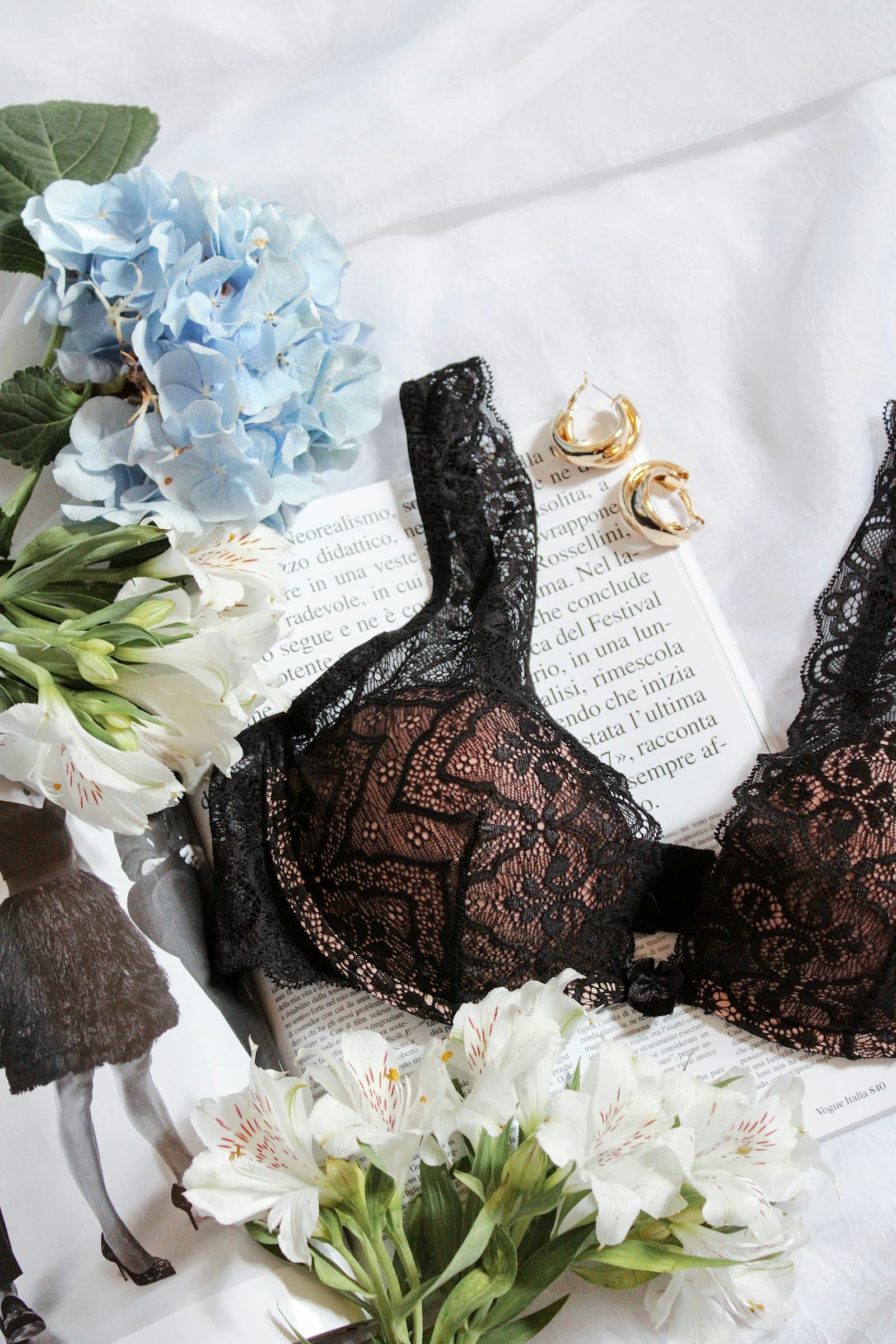
Chantilly and Leavers laces are built from threads finer than a hair. There is no weave here forgiving enough to be scrubbed: there is a net, and nets tear. A stain on lace is handled in a bowl, with one hand always under the fabric, so the weight of the wet piece never hangs from a single point.
Never wring it, never hang it. Press the water out inside a white towel and dry flat, in shade, far from a radiator. The elastane woven into the net loses its spring at temperatures fingers still call pleasant.
Knowing when to stop
Some stains belong in other hands immediately: darkly dyed silk that may bleed, an old grease mark, an unknown substance from a hotel laundry. A good workshop that specialises in delicate fabrics wants to know two things, what the stain is and what has already been done to it. The second answer weighs more than the first, because home attempts change the chemistry of the problem.
There is also a moment when stopping is the wiser move. One attempt too many turns a discreet shadow into a worn, matte patch visible from across the room. Silk endures patience for a long time and determination for a very short one.
It is worth remembering that a stain keeps working inside the wardrobe as well. An invisible trace of sugar or perspiration oxidises for months and steps out of hiding in spring, the colour of weak tea. Silk is put away washed, thoroughly dried and interleaved with tissue paper, never straight from the evening.
Silk fears the haste of our rescue far more than it fears the stain.
The evening it all began carries on. A drop of wine lifted with a white handkerchief in the first minute leaves nothing but a damp trace that dries before dessert arrives. Nobody but you knows it was ever there.
Fabric made to last a dozen seasons is meant for evenings exactly like this, for a life that leaves marks and a well-woven silk able to carry them. It asks for cool water, a little time and rather less good intention than instinct suggests.