
Guides
Silk or Satin? The Difference Your Skin Can Feel
7 min read
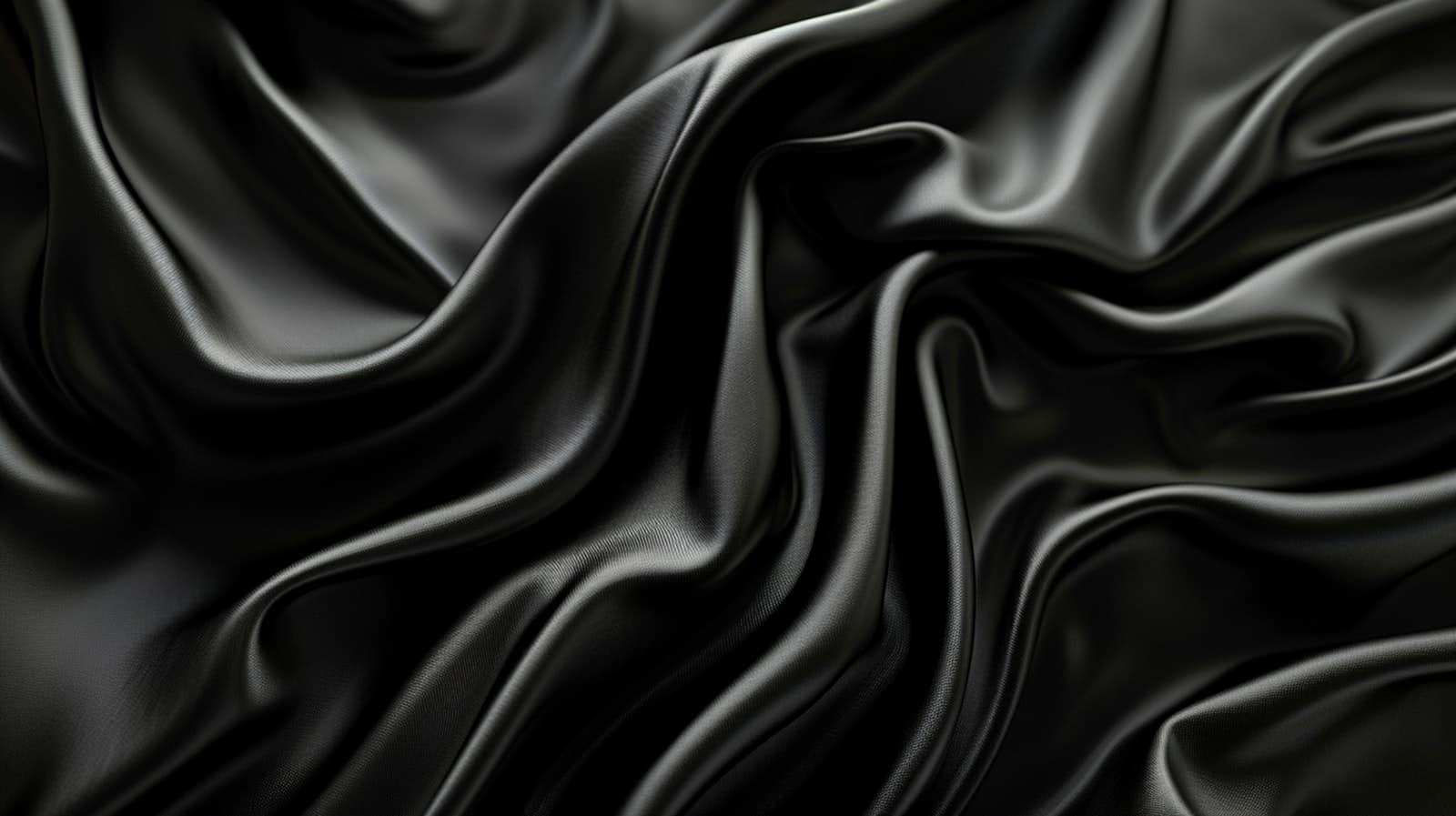
Type “satin pyjamas” into a search engine and two listings appear side by side: one for fifteen euros, one for two hundred. In the photos they look nearly identical — the same liquid sheen, the same soft folds, the same promise of a cool touch. The difference only shows up at night, on your skin, not on your screen.
Before you touch either, it helps to untangle the vocabulary. Because the question “silk or satin?” — asked by half the internet — is framed wrong. It is a little like asking whether you prefer wool or a jumper. One word names a raw material, the other a construction.
Weave versus fibre: where the confusion began
Satin is not a material. It is a weave — the way warp and weft threads cross on the loom. A satin weave can be made of silk, cotton, viscose and, since the nineteen-seventies, mostly polyester. Silk, on the other hand, is a fibre: a protein filament the mulberry silkworm spins into its cocoon. It can be woven into satin, but just as well into matte crêpe, transparent organza or crisp taffeta.
The confusion is a product of the market. When cheap synthetic fibres learned to imitate the satin gloss, the word became a convenient umbrella: it sounds sensual, promises no particular composition and spares the label from stating “one hundred per cent polyester” outright. After decades of such labelling, most of us say “satin” meaning “something slippery and shiny” — a description of an effect, not of a fabric.
How a satin weave works
In a classic plain weave, each weft thread passes over one warp thread and under the next, like a wicker basket. The surface is evenly interrupted, which is why it reads as matte. In a satin weave, a thread travels over four, seven, sometimes eleven threads before it dips under the next one. The face of the fabric ends up covered with long, unbroken stretches of yarn — the floats — which reflect light like rows of miniature mirrors.
The floats create both the gloss and the slip: your hand glides along long, smooth strands rather than a dense grid of interlacings. The reverse stays matte — hence the familiar effect of a shiny side and a muted side. Charmeuse, the fabric most silk lingerie is cut from, is exactly that: a satin woven from silk threads. The weave provides the shine; the fibre provides everything else.
The same mechanism works in reverse: silk does not have to shine at all. Crêpe de chine has a finely grained surface, chiffon is airy and nearly matte — and both are one hundred per cent silk. Sheen is not proof of nobility. It is proof of a weave.
Why polyester satin shines differently
If the weave can be the same, where does the difference in lustre come from? From the geometry of the fibre. A silk filament has the cross-section of a rounded triangle — it behaves like a prism, splitting and scattering light. That is the source of silk’s soft, deep glow, shifting with every movement of the cloth: now pearly, now warmer, never uniform.
Polyester leaves the spinneret as a perfectly round, homogeneous rod. It reflects light evenly and hard, producing a sharper, whiter, more plastic shine — closer to a mirror than to a pearl. This is why cheap satin can look more spectacular than silk in photographs, and flat in real life. The eye cannot name it, but it sees it.
What the skin feels: four differences you cannot see
The most important differences reveal themselves not in the light but in the dark — across seven or eight hours of contact with the skin. Instead of a table: four pairs of properties, described the way the body registers them.
Thermoregulation. Among natural fibres, silk is an unusual insulator: in the cold it holds warmth close to the body, in the heat it lets the excess escape. Polyester insulates in one direction only — it stores heat even when you would rather it did not. Hence the familiar overheating at three in the morning.
Moisture. Silk’s protein fibre absorbs humidity and releases it into the air while staying dry to the touch. Polyester absorbs trace amounts — under one per cent of its own weight — so perspiration has nowhere to go: it stays on the skin or settles on the fabric.
Silk can bind up to a third of its own weight in moisture before it begins to feel damp. Polyester — less than a hundredth.
Static. Thanks to the water it holds, silk conducts charges away and does not spark. Polyester in dry winter air charges up, attracts dust and crackles as you undress.
Behaviour at night. Silk drapes and moves together with the body: when you turn, it slides rather than drags. Polyester satin is often cold at first touch and clammy towards morning. The surface is slippery — the microclimate underneath it is not.
And then there is friction. Hairdressers and dermatologists recommend silk pillowcases for a reason: less friction means fewer sleep creases pressed into your cheek by morning and less static in the hair. Smooth polyester satin reduces friction too — that much should be said fairly — but it does not manage moisture or heat.
The label says everything — if you know how to read it
Composition first. Look for “100% silk” or “100% mulberry silk” — soie in French, Seide in German. Terms like “satin”, “silky”, “silk touch” or “silk feeling” say nothing about the fibre: they describe an effect. If the composition line lists polyester, it is polyester, however much the collection name reads like poetry.
Then momme. The weight of silk is given in momme (mm): one momme is roughly 4.34 grams per square metre. Lingerie and pyjamas are usually cut from charmeuse of 19–25 momme; below 16 the fabric turns sheer and fragile, above 25 it grows heavier, more liquid and distinctly more expensive. A producer with something to boast about states the number outright.
Watch out for blends and hybrid constructions, too. “Silk blend” can mean seventy per cent silk just as easily as five — the percentages must appear on the label. Sometimes only the front of a bra or camisole is silk while the back and straps are synthetic; the composition is then listed separately for each part. And OEKO-TEX, often mistaken for a guarantee of natural origin, only certifies the absence of harmful substances — polyester can carry it too.
The final clue is price. Thousands of cocoons go into a kilogram of yarn, and that sets a hard floor under the cost of the raw material. A fifteen-euro silk pyjama set is not silk — not because the maker is stingy, but because of arithmetic.
Two tests you can do at your dresser
The touch test. Hold the fabric against your cheek or the inside of your wrist for a few seconds. Silk is cool only for a moment — the protein fibre quickly takes on your skin’s temperature and begins to give warmth back. Polyester stays indifferently cool much longer, and rubbed against the skin it glides without that barely perceptible, delicate grip silk owes to the microscopic roughness of its protein.
The ring test. A classic: slip a smooth ring off your finger and pull the fabric through it. Silk, soft and springy at once, flows through the ring in a single motion. Polyester satin more often resists, bunches and snags. It is an approximate test — very thin polyester will slip through too — but combined with the label and the touch test, it rarely misleads.
A third test — burning — is best left to laboratories: protein fibre smells of singed hair and extinguishes itself, while a synthetic melts into a hard bead. Setting fire to new lingerie, however, is difficult to defend as a shopping method.
A choice, not a hierarchy
None of the above makes polyester satin a poor relation to be ashamed of. It has real virtues: it does not crease, costs a fraction of the price, survives the washing machine without ceremony and keeps its colour for years. There are wardrobes, budgets and occasions for which it is simply the sensible choice.
The point is something else: to choose knowingly. To know that “satin” on a label describes a weave, not nobility; that behind a sheen there may be protein or plastic; and that skin — the most credible reviewer of all — will tell the difference around three in the morning, long after the marketing has gone to sleep. The rest is yours to decide.