
Behind the Scenes
A seam you cannot feel. On the finishing that decides comfort
6 min read
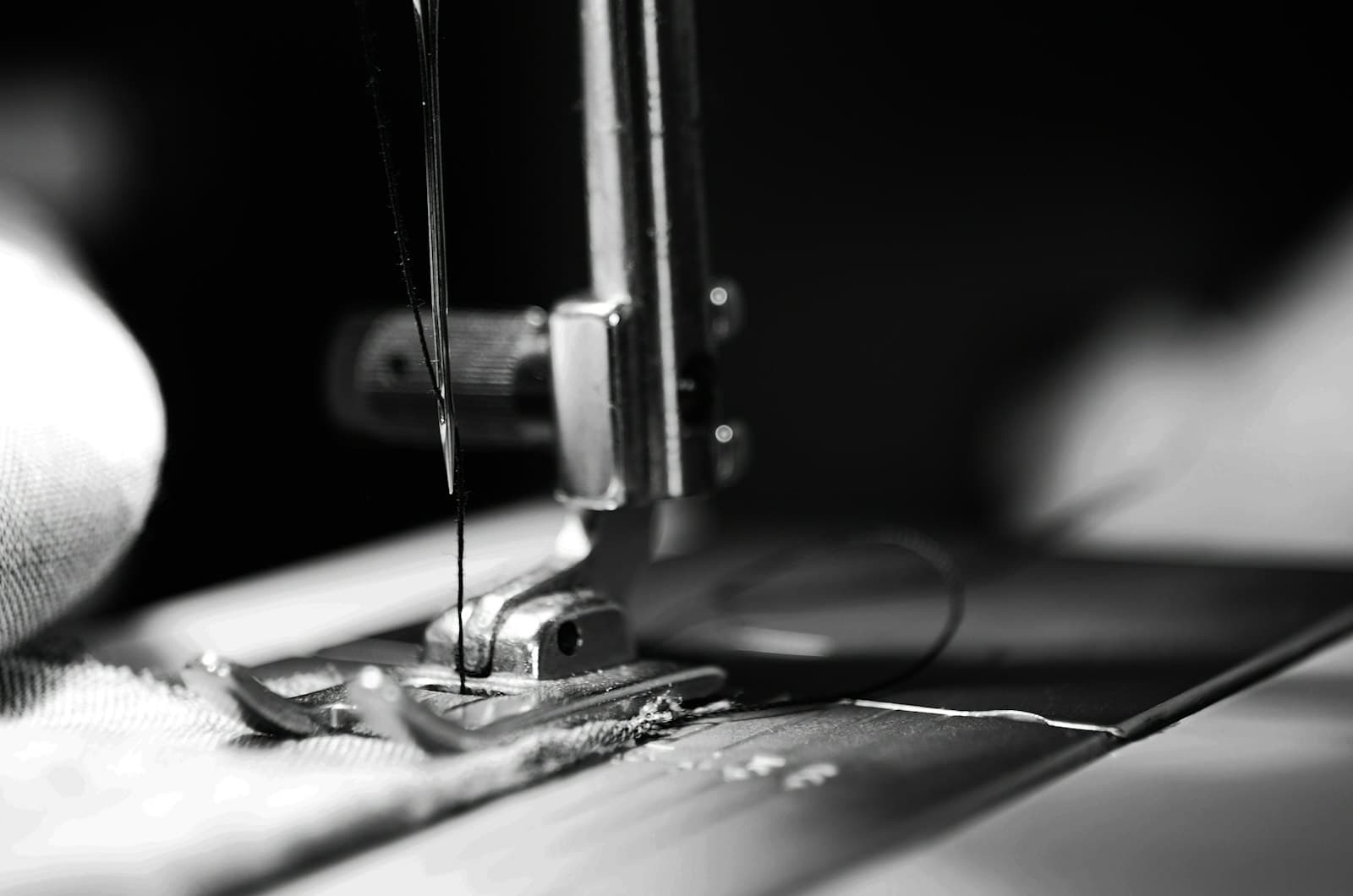
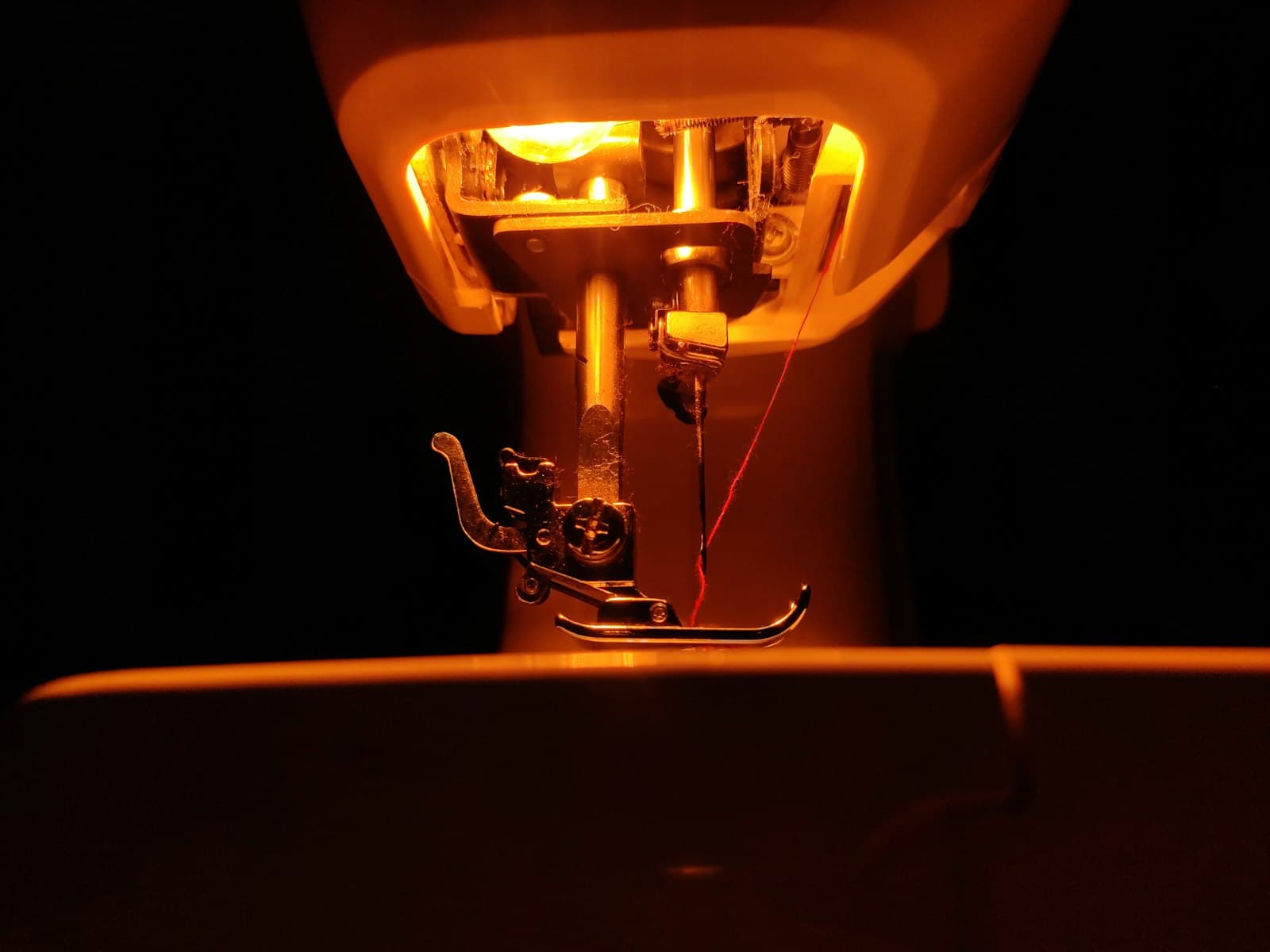
The needle enters the fabric twice a second and each time does the same thing: pierces, catches the thread, withdraws. Under the foot a strip of silk the width of a finger moves along. From the side it looks mechanical, right up to the moment someone slows down and shows how many decisions fit into a single centimetre.
Lingerie is one of the few things judged by the skin before it is judged by the eye. Cut and lace are visible on the hanger. Finishing reveals itself only after a few hours of wear, and it decides whether a set returns to the drawer for good, or for ever.
Where the design ends and the craft begins
A technical drawing states the proportions of a cup and where the side seam runs. It does not say which way the seam allowance should be pressed, or whether the thread must be finer than the cloth it joins. Those things are settled at the machine, on samples, and they take up most of the time in a workshop.
The principle that orders everything is simple: the less material left between the body and the dress, the fewer things can chafe. Every allowance, every double layer, every knot of thread is a potential point of pressure that, after an hour, becomes the only thing you can think about.
So good finishing almost always means less rather than more. A narrow hem instead of a wide turn-up, one seam instead of two, lace finished with its own edge instead of an applied binding. Subtracting is harder here than adding.
The French seam, a raw edge folded into itself
In light silk the edge frays at a touch. An overlocker solves this quickly but leaves a roll of thread that can be seen and felt through thin cloth. The French seam solves it elegantly: two passes instead of one, with the raw edge shut inside like a letter in an envelope.
It is made inside out. First the fabrics are joined wrong sides together, narrowly, at three or four millimetres. Then the allowance is trimmed, the work turned, pressed and stitched again so that the first seam disappears into the fold. The finished seam is five millimetres wide and has two smooth faces.
It takes twice as long as an overlocked edge and demands a precision no machine speed can replace. It is, however, the only finish after which a habotai slip looks as good from the inside as from the outside.
Needle, thread and tension
Silk takes a finer needle than anything else: size 60/8 or 70/10, sharply ground, with a point that parts the threads instead of cutting them. A universal needle, blunted by a hundred previous metres, leaves visible pulls in the weave that can never be closed again.
The thread must be finer than the fabric, not the other way round. A heavy thread in thin silk behaves like steel cable in paper: it takes the strain, and the material tears along it at the first strong movement. With a well-chosen thread the seam gives way instead of the cloth, and a seam can be repaired.
Then there is tension, set separately for every batch of material. Too tight and the seam draws into a wave no iron will ever flatten. So before the real sewing begins, a sample from the same bolt goes through the machine, with the same thread and the same stitch length, usually around two millimetres.
A flat seam wherever the body touches
There are places where a seam has no right to be felt: under the bust, along the waist, down the sides, anywhere the fabric meets the pressure of elastic or the edge of a waistband. In those places the seam is laid flat, with no allowance standing on end, and if the construction allows, it is moved a few millimetres away.
A flat join has another, visible advantage. It does not print through the outer layer, so under a close-fitting dress it draws no line at all. The same principle applies to allowances, which in thin fabrics are pressed towards the back rather than the centre, so that the shadow falls where nobody is looking.
At the points of greatest strain, at the fastening and where straps are anchored, the seam turns back on itself in a short bar tack. A few stitches back and forth, worked by hand, hold more than twice the length of machine stitching.
Elastic, tape and lace that ends itself
Elastic is applied under a stretch measured in percentages, not by eye. Too much and the fabric gathers, leaving a permanent ripple after a few washes; too little and the set begins to travel over the course of a day. The right value depends on the place: one figure at the lower edge, another at the leg, another under the bust.
Elastic that touches skin has a soft plush side underneath and a picot edge on top, which removes the need for any turn-up at all. Where an edge is to vanish completely, elastic gives way to lace finished with its own mill edge. Then there is no hem, no seam and no line under clothing.
It is the shortest route to the effect most sets are after: an edge that simply ends, with no evidence that anyone ended it.
Boning, hooks and small metal things
Spiral boning, made of steel coiled into a spring, bends in every direction and returns to shape. Flat plastic does it once, then keeps a crease that digs into a rib. The difference in cost is small; the difference after a year of wear is total.
Boning never touches the body directly. It sits in a channel of tape, closed by stitching at both ends so its tip has nowhere to travel. The tips are capped separately, because they are exactly what breaks through the fabric after several years.
Hooks are mounted in two or three rows, giving a few centimetres of adjustment. This is not a temporary convenience but a way for a piece to survive the natural changes of a body. Sliders and rings on straps should be metal: plastic cracks in the middle in time, at the worst possible moment.
The label and other last decisions
A woven label with a decorative edge photographs beautifully and scratches all day. Lingerie therefore uses soft satin labels stitched into a seam, or printing straight onto the fabric, which has no thickness at all. It is the detail nobody considers when buying and everybody remembers a week later.
The same goes for thread ends. Left long, they tangle into lace in the wash and drag the weave. Cut too short, they release a whole seam at the first strain. So they are left a few millimetres long and locked with a bar tack, which is once again handwork.
In the YES VERSE workshop in Bielsko-Biała these decisions are made over a single piece, before an entire run begins. When a set comes back from its first wearing test, the notes almost always concern the finishing rather than the cut.
Well-made lingerie is lingerie the skin forgets within the first five minutes.
The needle still enters the fabric twice a second. The strip of silk under the foot turns into a seam that someone will wear for a whole day in a few weeks' time and never once notice.
That is what this work is about. Not making a piece ask for attention, but making sure it never asks for it at the wrong moment.