
Styling
The Evening Begins Underneath. On Dressing for Grand Occasions
7 min read

The gown has been hanging on the wardrobe door since noon, and everyone assumes it is the heroine of the evening. It is not. The evening begins earlier and one layer deeper — in a drawer opened without hurry, while the flat still smells of the bath and steam settles on the mirror. The first layer is a decision nobody will see, yet every minute of the night ahead will feel it.
It helps to think of dressing for grand occasions as architecture. The facade collects glances and compliments, but the foundation decides whether the whole stands firm. This essay is about foundations: what to wear under a backless dress, what belongs beneath a silk slip, how smoothness and lace behave under fine fabrics — and why white almost never goes under white.
The architecture nobody sees
Dressmakers have always known it: fabric falls the way the layer beneath allows it to. The same gown can look like two different dresses depending on whether the first layer works with its cut or against it. A strap crossing an open back, an edge pressing into the hip, lace mapping itself under matte silk — none of these details is a catastrophe, but each one quietly taxes the outfit's confidence.
Hence the first rule, contrary to habit: for a grand occasion, lingerie is chosen together with the dress, not after it. A fitting without the first layer the dress will actually meet that night is only half a fitting. Ten minutes in front of the mirror a week ahead spares you an hour of nervous adjustments on a day when your nerves will be needed elsewhere.
The open back, an exercise in courage
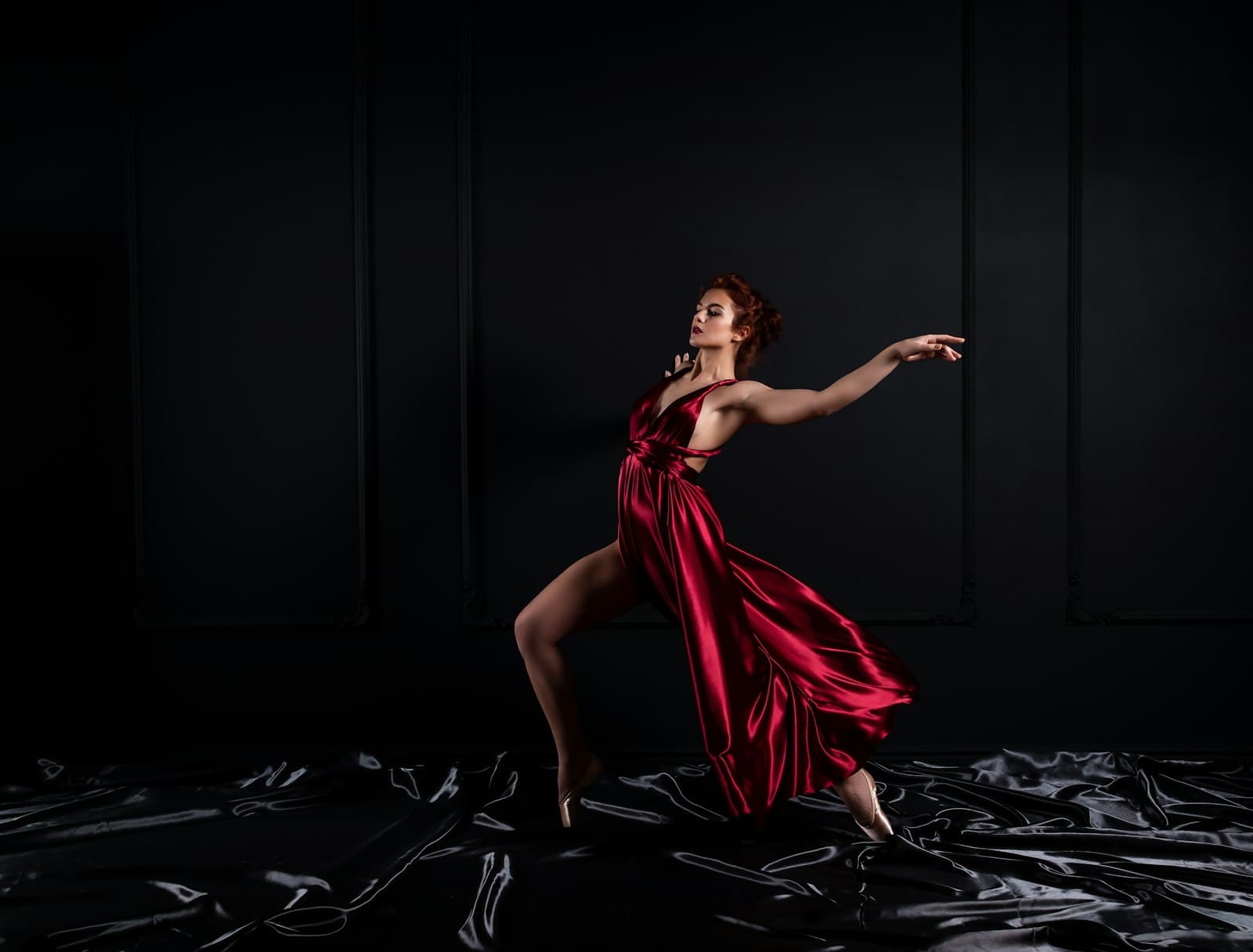
A dress cut low in the back is the loveliest proof that elegance doesn't need to reveal much in order to say a great deal — on one condition: no bra strap may run between the shoulder blades. There are several solutions and none requires heroism. Low-back designs, crossed at the small of the back, hold securely even with a cut that reaches the waist. Adhesive cups will carry an evening in lighter fabrics with dignity, though they shouldn't be trusted with twelve hours of an August wedding.
There is a third way: trust the construction of the dress itself. A well-made gown with boning or a structured front knows what to do on its own. Then the only first layer left is a pair of smooth briefs — and posture. Because an open back is, at heart, an exercise in courage: worn upright and unapologetically, it says more than many a neckline. Just rehearse the full range of motion at home — sitting down, reaching for a glass, dancing — before doing it in public.
Silk on thin straps. Sometimes the answer is nothing
A slip dress forgives nothing, and that is exactly why we love it. Thin silk on narrow straps reports on every layer beneath — so that layer must be either impeccable or absent. Impeccable means seamless, smooth, matched to skin or dress, with laser-cut edges that simply end instead of leaving an imprint.
Absent is the option spoken of in a whisper, and often the most elegant of all. Silk is sensual in its own right; laid directly on the skin, it breathes in the same rhythm. If the cut holds and the fabric has enough weight to drape rather than cling, going without underneath is not neglect but a decision — made consciously, in your own mirror, on your own terms.
Smooth or lace. A quarrel about texture
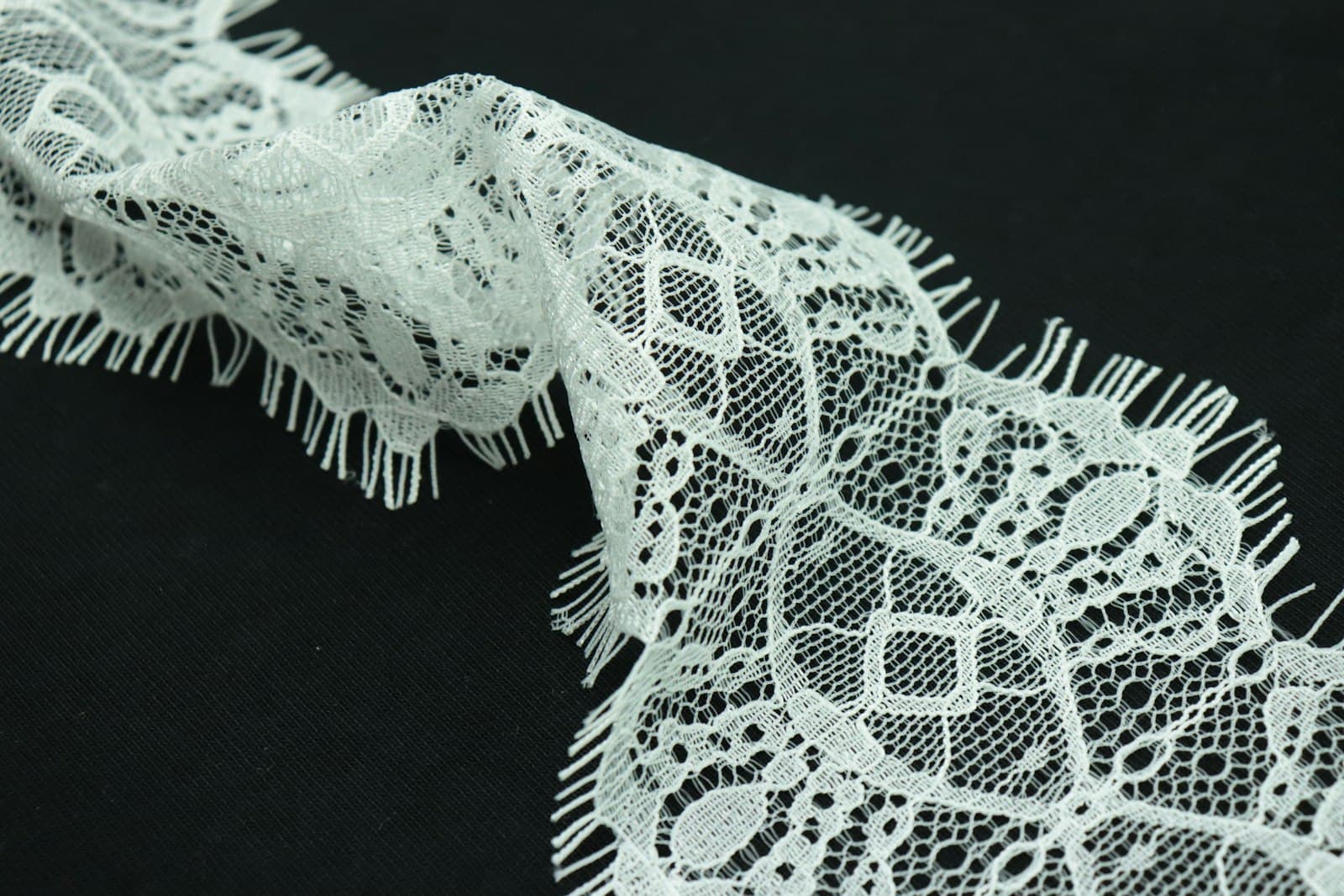
Under thin, matte fabrics lace behaves like a relief: light falling at an angle picks out every flower of the pattern. In the evening, between candlelight and camera flashes, the effect can surprise you. The rule is simple, though not dogmatic: the thinner and more fluid the outer fabric, the smoother the first layer should be. Satin finishes, microfibre, silk — surfaces a dress glides over instead of catching on.
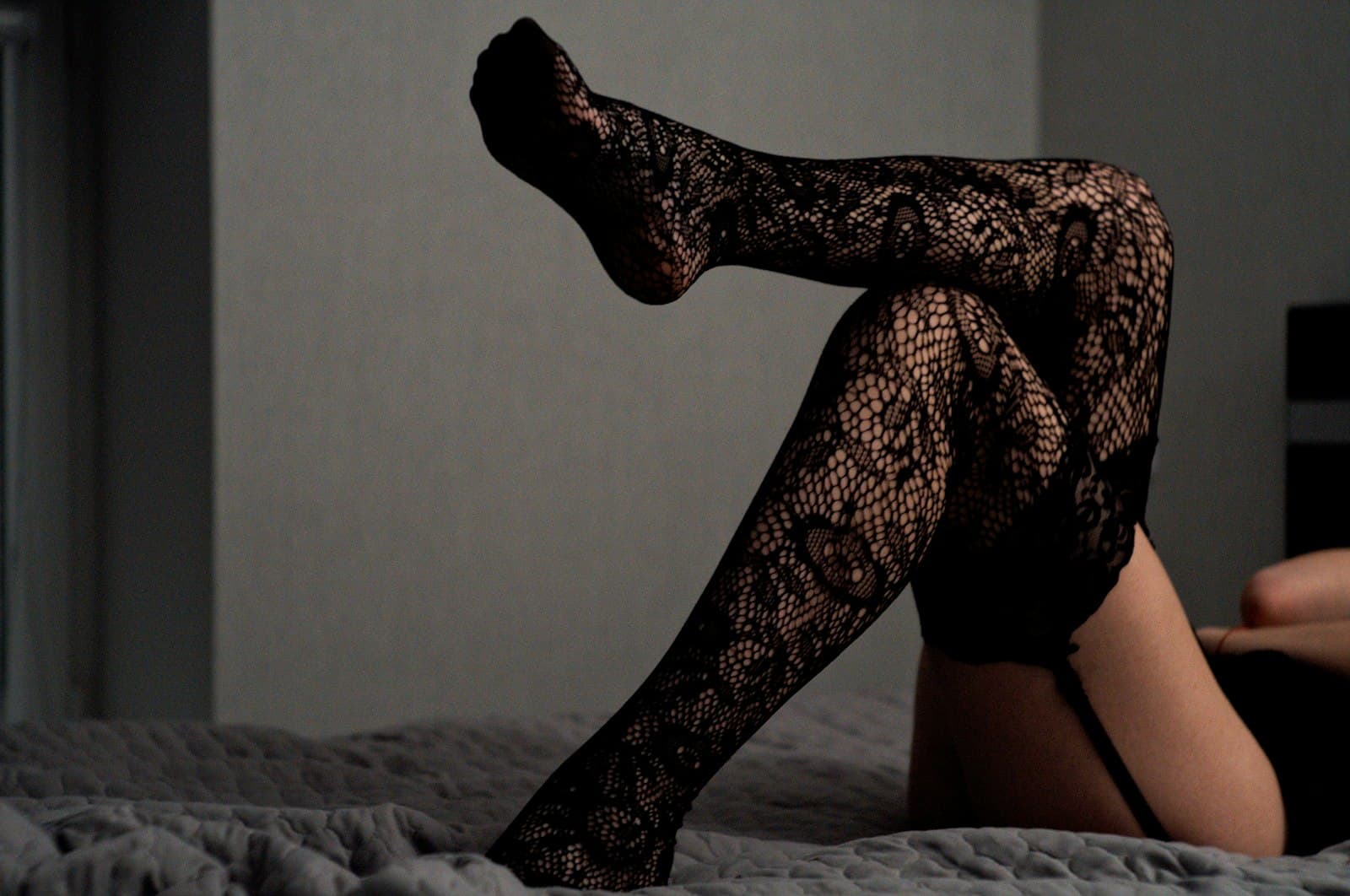
Lace returns to the game once the fabric has a lining, structure or weight: crepe, heavy silk, velvet, jacquard. Then the first layer may be as ornate as you please — nobody will see it, which is not the same as it not being there. For some women this is the greatest private pleasure of a grand evening: knowing that beneath the composed black, something far less composed is going on.
Perfectly chosen lingerie disappears twice: first under the fabric, then from your thoughts.
Colour. Black rarely lies, white almost always does
Under black, freedom reigns. Black lingerie is the obvious choice, but deep plum, bottle green or burgundy vanish under black cloth just as completely — and the evening gains a second story known to one person only. If the black dress is thin, the rules of texture apply; if it is heavy, anything may happen below. For an opera night under heavy black you may even allow yourself red: a private joke the audience will never learn of.
White is another matter, and the wardrobe's greatest myth. White lingerie under white fabric does not disappear — it glows. It reflects light more strongly than the skin around it and draws a crisp outline. Under white and pale pastels the first layer should be the colour of the body, not of the cloth: from porcelain beige to deep brown, always as close to your own skin tone as possible. It is one of those rules that sound counterintuitive right up until the first try in front of a mirror in good light.
Three evenings, three first layers
Theory only earns its keep when it survives the test of the particular. Here are three evenings we all know — and three different answers to the same question about the first layer. What separates them is length, distance, and who gets to see more when the night ends.
The opera
A long evening, but a static one: much sitting, little movement, strangers at close quarters and a cloakroom attendant who sees more than the critics do. The gown is usually structured, so the first layer's job is to be imperceptible: smooth, breathable, without a single edge that will start announcing itself after the second act. This is an evening for silk — the finest temperature regulator nature knows.
A wedding
Twelve hours, four times of day, and dancing with partners who don't always know the steps. Reliability wins here: a set already proven on a long day, no opening-night experiments. Seamless edges, dependable straps, nothing that needs adjusting. At a wedding, lingerie has one task: to vanish for twelve hours and let you be present.
Dinner for two
The only scenario in which the first layer may stop being a secret — so it obeys the opposite logic. Here lace plays first violin, colour no longer has to pretend, and the set may be chosen with more care than anything worn over it. You dress twice: once for the restaurant, once for coming home. Both versions deserve the same attention.
A ritual, not logistics
The greatest mistake of grand evenings is made in a hurry: lingerie pulled on somewhere between drying your hair and hunting for keys — the last clean set, whichever it is. Yet getting dressed is part of the evening, not the logistics before it. It begins with the bath, with light that doesn't glare, with music. The clasp of a bra can be the first chord, not an item ticked off a list. An hour taken out of the evening for dressing slowly is not an hour lost — it is the evening's first hour.
When the first layer is considered, the rest of the evening is worn differently: a straighter back, calmer gestures, the kind of ease no facade can grant, however beautiful. The gown will collect the compliments, and rightly so — that is its job. But the confidence with which you climb the opera stairs or step onto the dance floor was made earlier. The evening truly begins underneath.