
Styling
Under the dress. Lingerie for a day that lasts sixteen hours
7 min read
The dress has been hanging on the wardrobe door since yesterday, in its cover, turned away from the world. On the chair beside it lies everything that appears in no photograph: a slip, a pair of stockings folded into a square, a strapless bra nobody will ever picture.
And yet it is that second pile which decides how the dress will look across sixteen hours. Fabric always shows what lies beneath it, and the better the fabric, the more honestly it does so.
The dress dictates the lingerie, never the other way round
The order gets reversed often, and that is the commonest mistake. Lingerie bought first, blind, almost always loses to a cut it knew nothing about. There is only one sensible sequence: the dress first, then what goes under it, and ideally a second fitting with the whole set in place.
Four things must be read from the dress before any decision is made. The depth of the neckline front and back, the presence or absence of boning in the bodice, the weight and transparency of the cloth, and where the top ends and the skirt begins. Everything else follows from those four answers.
The lingerie should be in hand before the final fitting at the seamstress. It sets the height of the bust, and that decides where the waist of the dress will fall and how the bodice distributes its pull. Swapping the set a week before the wedding means another round of alterations, on a fabric that dislikes being sewn twice.
A built-in bodice versus a bra
A well-built bridal bodice is a construction of boning and an inner band under the bust that carries the entire weight. If the dress has one, adding a bra usually spoils more than it solves: two systems of support fight each other, and the seam of a cup prints through satin in the least desirable place.
If there is no bodice and the fabric is light, the neckline decides. A strapless bra holds on the band, not on the shoulders, so it needs to sit a size tighter around the ribcage than an everyday one and to carry silicone along the whole band. A smooth seamless cup, half a tone darker than the skin.
There is also a criterion that reveals itself only after a few hours: anything that pinches at the fitting will be unbearable after dinner. While trying on, sit down, raise your arms, breathe deeply and bend forward. Four movements, four answers.
Bare backs and other difficult cases
A dress cut low at the back is now the rule more often than the exception, and with it comes the question of support. There are three answers, in order of reliability: a bodice stitched into the dress by a seamstress, a low-back bodysuit, and finally adhesive cups.
That last option asks for an honest rehearsal, and not a ten-minute one. The adhesive holds on skin that is clean and completely dry, without lotion or oil, and loses strength as the room warms. In August, after dancing, it is less loyal than in March.
A backless dress brings one more thing that is easy to forget: the line of the briefs. Seamless in a skin tone, or a thong, but always tried on under the dress in full light rather than in the half-dark of a fitting room.
The slip, a layer nobody will see
A slip does three things at once and each is worth its weight. It separates the body from the dress fabric, so the cloth stops clinging with every step. It smooths whatever lies beneath. And it gives the dress a surface to glide over instead of catching on skin.
A silk slip in crêpe works better than one in charmeuse, though charmeuse is the prettier of the two. Crêpe has a spring that keeps cloth at a distance, while satin flows along with the dress and can stick to it. The colour is matched to the skin, not to the gown, because under thin white it is a white slip that draws itself most clearly.
A slip ends at least two centimetres above the hem of the dress, and a narrow skirt needs a vent, otherwise it is the slip and not the gown that decides the length of a stride. With a train, a shorter knee-length version works better, since it stays out of the way when walking backwards.
Stockings, garter and the temperature of the day
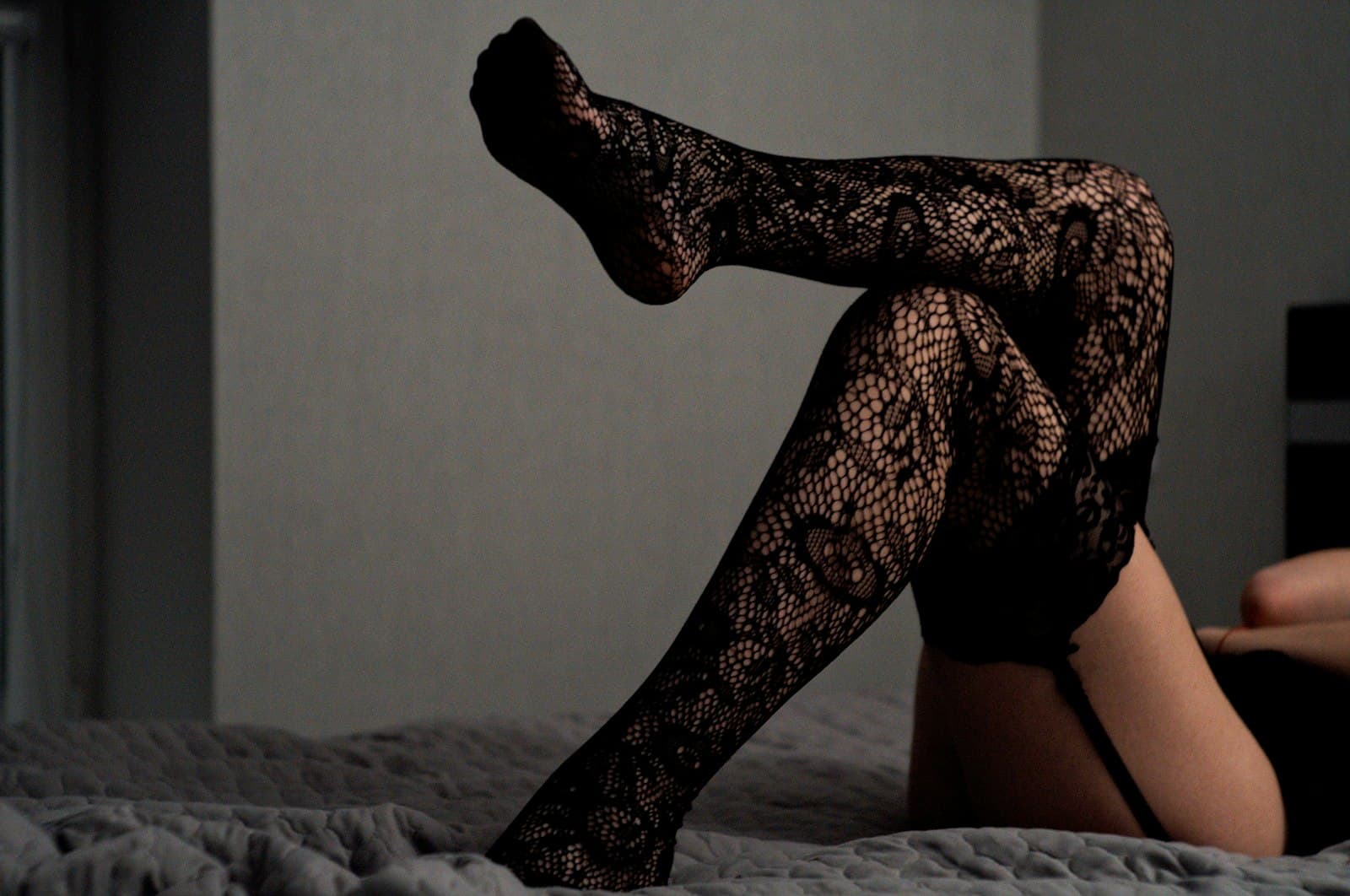
Hold-ups under a wedding dress have one advantage over tights that is rarely mentioned: they can be adjusted in thirty seconds without dismantling half the outfit. The silicone band holds on dry, cream-free skin, so body lotion goes on the evening before, not in the morning.
Denier is chosen for the month and for the room. Fifteen den is a veil for a summer wedding in a garden; twenty to thirty gives more confidence on a cooler evening and stands up better to friction against a flounce. Always a second pair in the maid of honour's bag, in the same shade.
The garter in all this is a purely ceremonial element and deserves to be treated as one. It sits above the knee, on the leg that will not be working during the dancing, and is best put on shortly before the ceremony itself.
White, ivory, nude: the colour that disappears
Under a white gown what disappears best is not white but a shade half a tone darker than the skin. White lingerie under thin cloth returns light differently from a body and draws itself as a clear rectangle, particularly in flash and in evening photographs.
Ivory, champagne and ecru gowns bring a further problem: pure white beneath them turns bluish. The safe rule is that lingerie should always be a tone closer to the skin than the fabric of the dress, never a tone lighter than it.
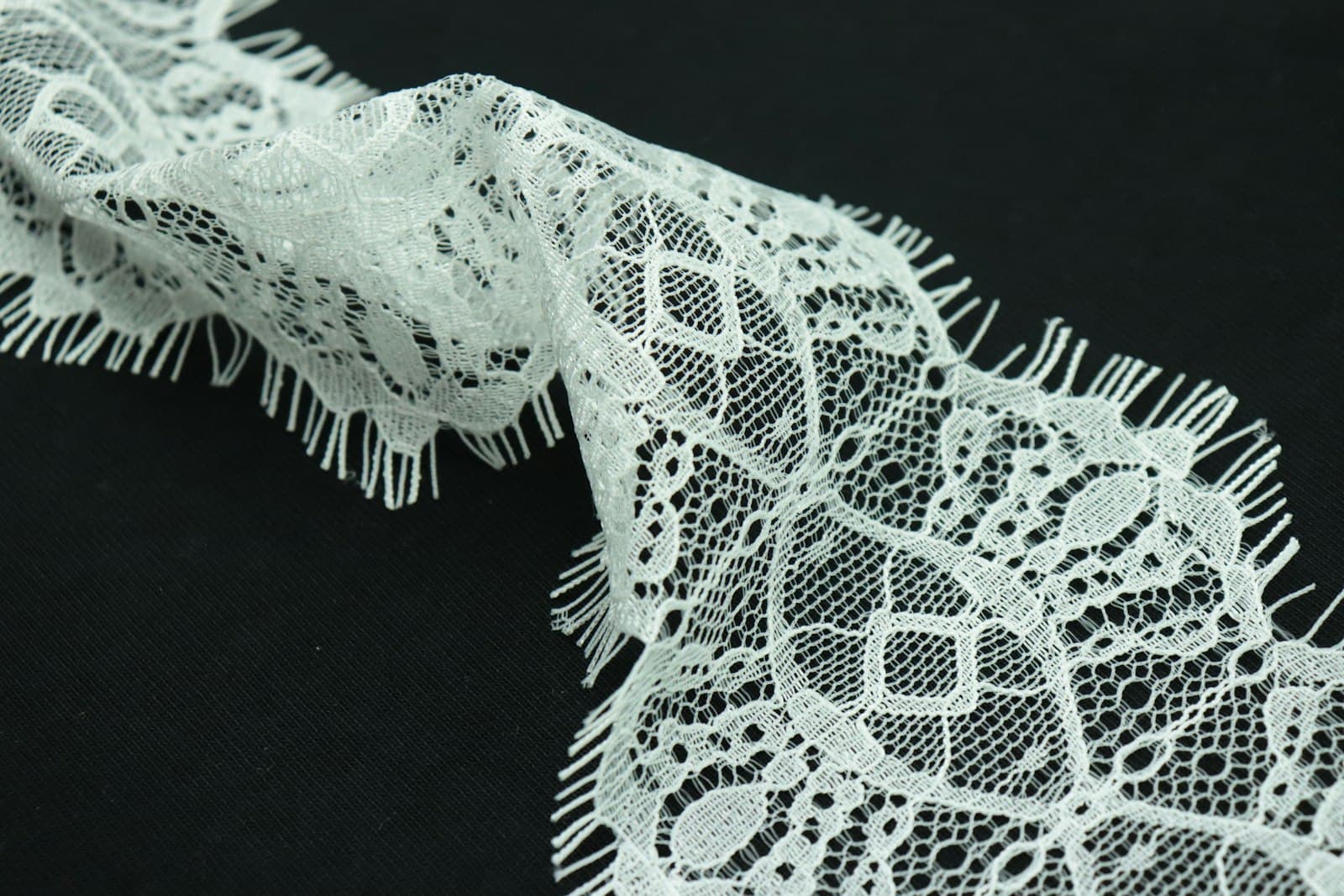
Texture deserves separate thought. Lace with a pronounced pattern under a smooth, thin gown draws itself exactly as it looks, so for this one day the smooth pieces win, and lace is kept for dresses whose fabric is dense and layered. It is the only occasion on which a plain cup beats a prettier one.
The rehearsal nobody runs
The last thing is the simplest and the most often skipped. The complete set, exactly the one travelling to the wedding, is worth wearing for three hours on an ordinary day. Sit at a table, climb stairs, dance in the kitchen, pick something up off the floor.
Three hours are enough to expose everything a fitting room hides: a band that slides, a bone pressing into a rib when seated, a seam printing through satin after an hour of warmth. Each of these has a solution, provided it comes to light a week in advance rather than at seven on the morning of the wedding.
The maid of honour's bag is worth filling with things that rescue a situation in a minute: a spare pair of stockings, double-sided fabric tape, a few safety pins, blotting papers and a small bottle of micellar water for a trace of foundation at the neckline. None of it weighs much, and all of it tends to be needed exactly once.
The best-chosen bridal lingerie is the kind the bride does not think about once all day.
In the evening, when the dress goes back on its hanger, all of it returns to the chair in the same order as in the morning. Not one guest could say what exactly was under the fabric, and that is precisely the point.
The layer that stays invisible has only one task: to let itself be forgotten from the first photograph to the last dance. If it never once asked for attention, it was chosen perfectly.